
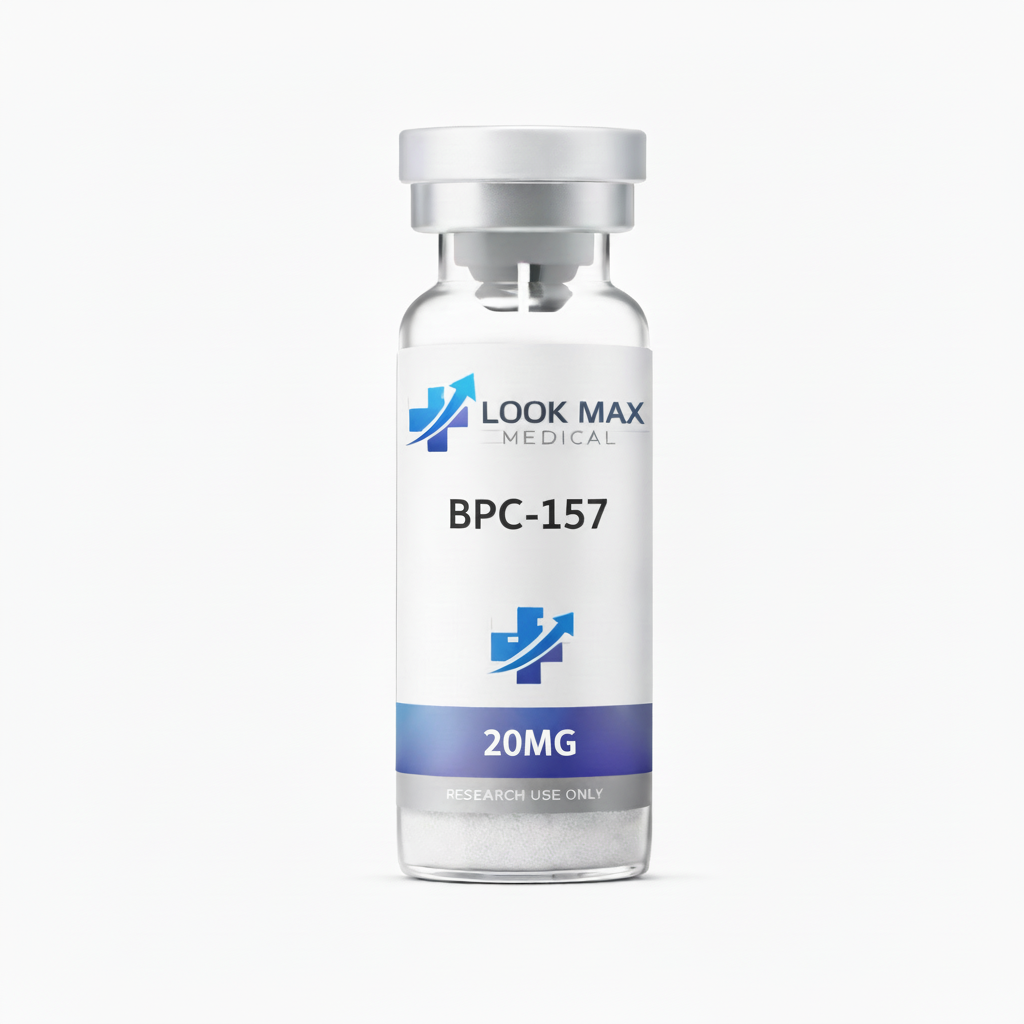
Description
Regenerative Peptide
BPC-157 — Research & Data
A body protection compound derived from a protein found in gastric juice. BPC-157 has been extensively studied for its effects on tissue repair, wound healing, and recovery in animal models.
How BPC-157 Works
BPC-157 is a 15-amino acid fragment of body protection compound isolated from gastric juice. It promotes tissue repair by upregulating growth factors (VEGF, EGF, FGF), stimulating angiogenesis, and modulating the nitric oxide (NO) system. It also interacts with the dopamine and serotonin systems.
Mechanisms of Action
Angiogenesis
Promotes new blood vessel formation, enhancing nutrient delivery to injured tissues for faster repair.
Growth Factor Modulation
Upregulates growth factor expression including VEGF and EGF to support tissue regeneration.
Anti-Inflammatory
Reduces inflammatory markers and protects against NSAID-induced gastrointestinal damage.
What Research Has Shown
Preclinical studies show BPC-157 accelerates healing of tendons, ligaments, muscle, bone, and gut mucosa. It protects against NSAID-induced GI damage and alcohol-induced lesions. It has shown neuroprotective effects in dopaminergic models. Note: All data is from animal models — no human clinical trials have been completed.
Certificate of Analysis
Third Party Tested
Research Areas
Musculoskeletal
Preclinical studies show significant improvements in tendon, ligament, and muscle healing.
Gastrointestinal
Originally isolated from gastric juice, BPC-157 has been extensively studied for GI applications including ulcers and colitis.
Neuroprotection
Brain-gut axis modulation. Modulates serotonin and dopamine systems; reduced brain damage in TBI models.
Bone Healing
Osteogenic effects observed in fracture models. Enhanced bone defect healing in rabbit studies.
Clinical Outcomes
Regulatory Status
Dosing Information from Research
Research protocols in animal models use 10–50 µg/kg body weight subcutaneously or intraperitoneally. Human-equivalent dosing is extrapolated at 200–800 µg/day subcutaneously. Oral (BPC-157 stable gastric pentadecapeptide) studies also show efficacy.
Pharmacokinetics
BPC-157 is highly stable in gastric juice (unlike most peptides). Subcutaneous half-life is estimated at 4–6 hours based on animal pharmacokinetic data. It distributes widely to connective tissues, GI tract, and CNS.
How It Works in the Body
BPC-157 activates the VEGF-mediated angiogenic pathway, promoting new blood vessel formation at injury sites. It upregulates growth hormone receptor expression and modulates the NO system, which is critical for vascular function and inflammation. It also interacts with the FAK-paxillin pathway involved in cell migration and wound closure.
Important Notes
- All published research on BPC-157 is preclinical (animal models). No completed human clinical trials exist.
- BPC-157 is uniquely stable in gastric acid, unlike most peptides which are rapidly degraded.
- Both oral and injectable routes show efficacy in animal studies, though mechanisms may differ.
Safety Profile from Research
What clinical studies report
No toxic effects have been reported in animal studies, even at very high doses. BPC-157 has shown a wide therapeutic window in rodent models. However, human safety data is not yet available from controlled trials.
Common Digestive Issues
No GI adverse effects reported in animal studies. In fact, BPC-157 demonstrates gastroprotective properties.
Treatment Discontinuation Rates
Not applicable — no human clinical trials completed.
Study Exclusion Criteria
A Phase 1 human trial is reportedly underway. Standard exclusion criteria would apply.
Researcher Notes
- BPC-157 is one of the most studied peptides in preclinical tissue repair research.
- It is commonly combined with TB-500 in research protocols studying connective tissue healing.
- The stable gastric pentadecapeptide form (BPC-157 stable) is designed for oral research protocols.
Compound Information
Storage Requirements
Lyophilized
Store at -20°C for long-term. Stable at 2-8°C for up to 6 months.
Reconstituted
Use within 14 days when stored at 2-8°C.
Light Sensitivity
Moderate light sensitivity. Store in original container away from direct light.
Research Status — Where It Stands
BPC-157 has over 100 published preclinical studies. No completed human clinical trials, though Phase 1 trials have been initiated. Classified as a research compound. Not FDA-approved for any indication.

Reviews
There are no reviews yet.