

Description
Ipamorelin & CJC-1295 (No DAC) — Research & Data
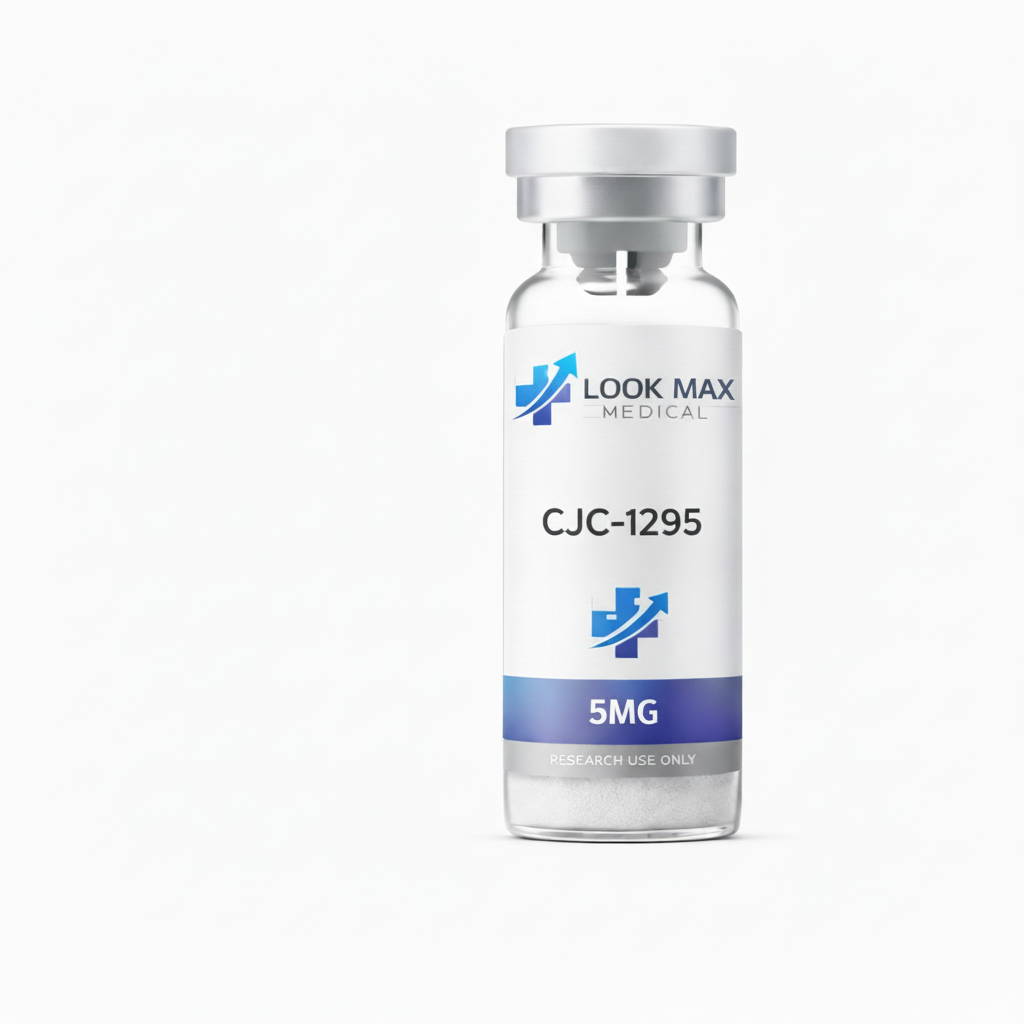
A combination of two complementary growth hormone peptides. Ipamorelin (GHS-R agonist) and CJC-1295 without DAC (GHRH analog) work synergistically to amplify pulsatile GH release.
How Ipamorelin & CJC-1295 (No DAC) Works
This combination exploits the synergy between GHRH and GHRP pathways. CJC-1295 (no DAC) activates the GHRH receptor, ‘priming’ somatotrophs by increasing intracellular cAMP. Ipamorelin simultaneously activates the GHS receptor (ghrelin receptor), triggering calcium influx. The dual activation produces GH release significantly greater than either peptide alone — a well-documented pharmacological synergy.
Mechanisms of Action
Dual-Receptor Synergy
CJC-1295 primes GHRH receptors while Ipamorelin activates GHS receptors, producing amplified GH output.
No DAC Advantage
Without DAC, CJC-1295 has a shorter half-life (~30 min), allowing more precise dosing and natural GH pulsatility.
Clean Profile
The combination preserves Ipamorelin’s selectivity — no significant cortisol, ACTH, or prolactin elevation.
What Research Has Shown
Studies of combined GHRH + GHRP show GH peaks 3-5 times greater than either alone. The combination restored youthful GH pulsatility patterns in older adults. The ‘no DAC’ CJC-1295 version allows precise, repeated pulsatile dosing without the sustained elevation seen with DAC-modified versions.
Dosing Information from Research
Common research protocol: 100–300 µg each of ipamorelin and CJC-1295 (no DAC) combined in the same syringe, administered subcutaneously 1–3 times daily. Optimal timing: morning fasted, post-workout, and/or pre-sleep to align with natural GH pulsatility.
Pharmacokinetics
Combined half-life profile: CJC-1295 (no DAC) ~30 minutes, Ipamorelin ~2 hours. Peak synergistic GH release occurs 15-45 minutes post-injection. GH returns to baseline within 2-3 hours, allowing natural pulsatile cycling. No significant drug-drug interaction between the two peptides.
How It Works in the Body
CJC-1295 (no DAC) binds GHRH receptors, increasing cAMP and priming GH granule release. Ipamorelin binds GHS-R1a, triggering calcium-dependent exocytosis. The dual-receptor activation converges on GH granule release, producing a synergistic pulse 3-5x greater than either alone. The short half-lives of both compounds allow the GH level to return to baseline between doses, preserving physiological pulsatility.
Important Notes
- This is the most widely used GH peptide combination in research settings.
- The synergistic effect means lower individual doses can achieve greater GH release.
- Both peptides can be combined in the same syringe without stability issues.
- Fasting enhances GH release — administer on an empty stomach for optimal results.
Safety Profile from Research
What clinical studies report
Both peptides are individually well-tolerated. The combination preserves ipamorelin’s clean side-effect profile (no cortisol/ACTH/prolactin elevation). Most common side effects are mild and transient: headache, flushing, injection site reactions.
Treatment Discontinuation Rates
Less than 5% across research protocols, primarily due to injection frequency burden.
Study Exclusion Criteria
Standard GH peptide exclusions: active malignancy, pituitary disorders, uncontrolled diabetes, elevated baseline IGF-1.
Researcher Notes
- The ‘no DAC’ version of CJC-1295 is specifically chosen for this combination to maintain pulsatile dosing.
- Avoid food for 30 minutes before and after injection for optimal GH release.
- This combination is often used as a reference standard when studying other GH peptides.
- Monitor IGF-1 levels at baseline and periodically during research protocols.
Compound Information
Storage Requirements
Lyophilized
Store at -20°C for long-term. Stable at 2-8°C for up to 3 months.
Reconstituted
Use within 21 days when stored at 2-8°C.
Light Sensitivity
Low. Standard storage in original container.
Research Status — Where It Stands
Both peptides are extensively studied individually and in combination. The synergistic GHRH + GHRP mechanism is well-established in endocrine research. Not FDA-approved. Active research compounds.

Reviews
There are no reviews yet.