
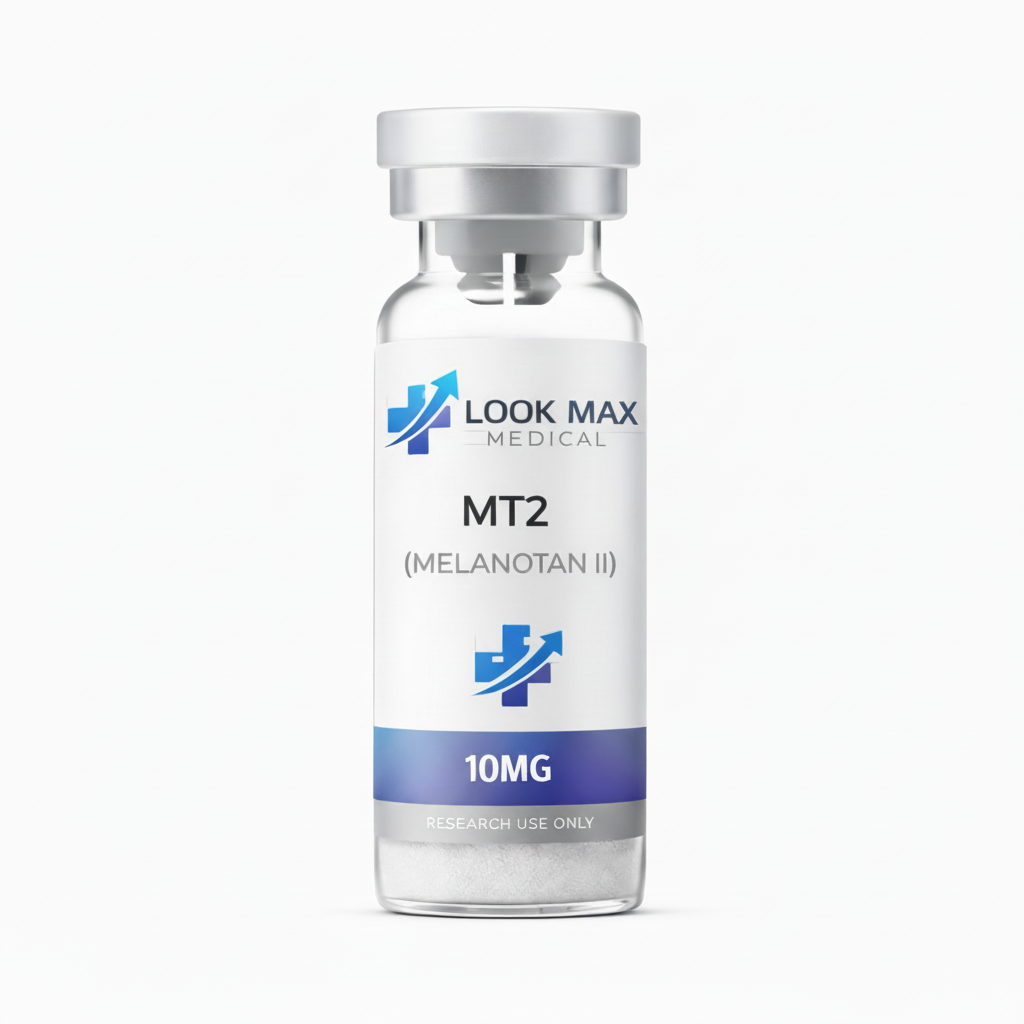
Description
Melanotan 2 (MT2) — Research & Data
A synthetic analog of α-melanocyte-stimulating hormone (α-MSH) that activates melanocortin receptors (MC1R–MC5R). Studied for its effects on skin pigmentation and photoprotection.
How Melanotan 2 (MT2) Works
MT2 is a cyclic peptide analog of α-MSH that binds melanocortin receptors (MC1R-MC5R) on melanocytes and other cell types. MC1R activation triggers eumelanin (brown/black pigment) synthesis via cAMP-PKA-MITF signaling. The non-selective binding to MC3R and MC4R in the hypothalamus also affects appetite and energy regulation.
Mechanisms of Action
MC1R Activation
Stimulates melanocortin-1 receptors on melanocytes, triggering eumelanin synthesis and skin darkening.
Broad MC Activity
Non-selective agonist at MC1R through MC5R, affecting pigmentation, appetite, inflammation, and energy homeostasis.
DNA Protection
Eumelanin production provides photoprotective effects, absorbing UV radiation and scavenging free radicals.
What Research Has Shown
Human studies show significant melanin density increase and skin darkening within 1-2 weeks of administration. UV-induced DNA damage was reduced by 47% in treated vs placebo groups. Nausea is the most common side effect, particularly with initial doses. Appetite suppression is reported due to MC4R activation.
Dosing Information from Research
Research protocols use 0.25–1 mg subcutaneously, starting with low doses (0.25 mg) and titrating up. Typical maintenance: 0.5–1 mg every 2–3 days. Initial loading phase: 0.5 mg daily for 7–14 days.
Pharmacokinetics
MT2 has a half-life of approximately 33–36 minutes after subcutaneous injection. Despite the short half-life, melanogenic effects persist for days due to downstream melanin synthesis activation. Peak plasma levels occur within 30 minutes.
How It Works in the Body
MT2 binds MC1R on epidermal melanocytes, activating adenylyl cyclase → cAMP → PKA → CREB/MITF pathway. MITF transcription factor drives expression of tyrosinase, TRP-1, and TRP-2 enzymes that synthesize eumelanin from tyrosine. The melanin is then transferred to surrounding keratinocytes via melanosomes, darkening the skin. Concurrent MC4R activation in the hypothalamus suppresses appetite.
Important Notes
- MT2 is non-selective — it activates all five melanocortin receptors, leading to multiple physiological effects.
- Nausea is extremely common with initial doses and typically subsides with continued use.
- New moles or darkening of existing moles may occur — dermatological monitoring is recommended.
- MT2 does NOT provide sunscreen-equivalent protection and UV exposure should still be managed.
Safety Profile from Research
What clinical studies report
Human studies report nausea (75–85% initially), facial flushing (40–60%), and fatigue (15–25%) as common adverse effects. Nausea typically subsides after 3-5 doses. Spontaneous erections have been reported in male subjects.
Common Digestive Issues
Nausea is the most prominent side effect, affecting 75-85% of subjects with initial dosing. This is dose-dependent and typically resolves with repeated administration.
⚠️ Theoretical Concern — Melanoma Risk
While MT2 stimulates melanogenesis (protective), there is theoretical concern that stimulating melanocyte proliferation could promote pre-existing melanocytic lesions. No causal link to melanoma has been established, but dermatological monitoring is advised.
Treatment Discontinuation Rates
10-15% in clinical studies, primarily due to persistent nausea or cosmetic concerns (uneven pigmentation).
Study Exclusion Criteria
Patients with history of melanoma, dysplastic nevi, autoimmune disorders, or those on photosensitizing medications were excluded.
Researcher Notes
- Start with low doses (0.25 mg) to assess tolerance — nausea is dose-dependent.
- MT2 effects on pigmentation can persist for months after discontinuation.
- Compare with MT1 (afamelanotide) for MC1R-selective research without broad melanocortin effects.
- Reconstitute with bacteriostatic water. Solution should be clear and colorless.
Compound Information
Storage Requirements
Lyophilized
Store at -20°C for long-term. Stable at 2-8°C for up to 12 months.
Reconstituted
Use within 30 days when stored at 2-8°C.
Light Sensitivity
Moderate. Store away from direct light to prevent degradation.
Research Status — Where It Stands
MT2 has been studied in multiple human clinical trials for skin pigmentation and photoprotection. Not FDA-approved. Compare with afamelanotide (MT1), which is FDA-approved for EPP. Active research compound.


Reviews
There are no reviews yet.